Native structure
Florida Native Plants for Real Yards
Use native plants as part of a practical edible-yard structure, not as a separate ideology or disconnected list.
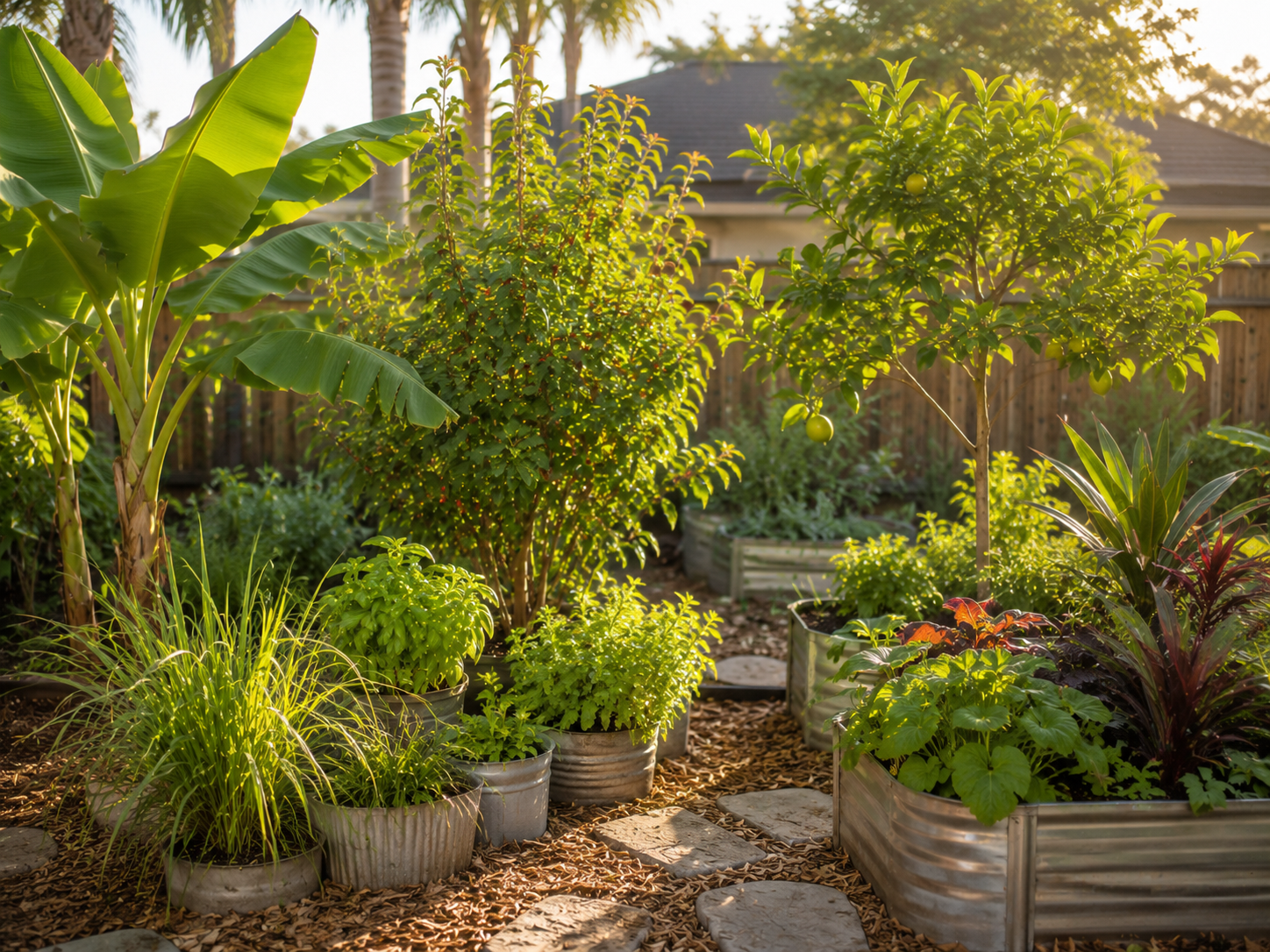
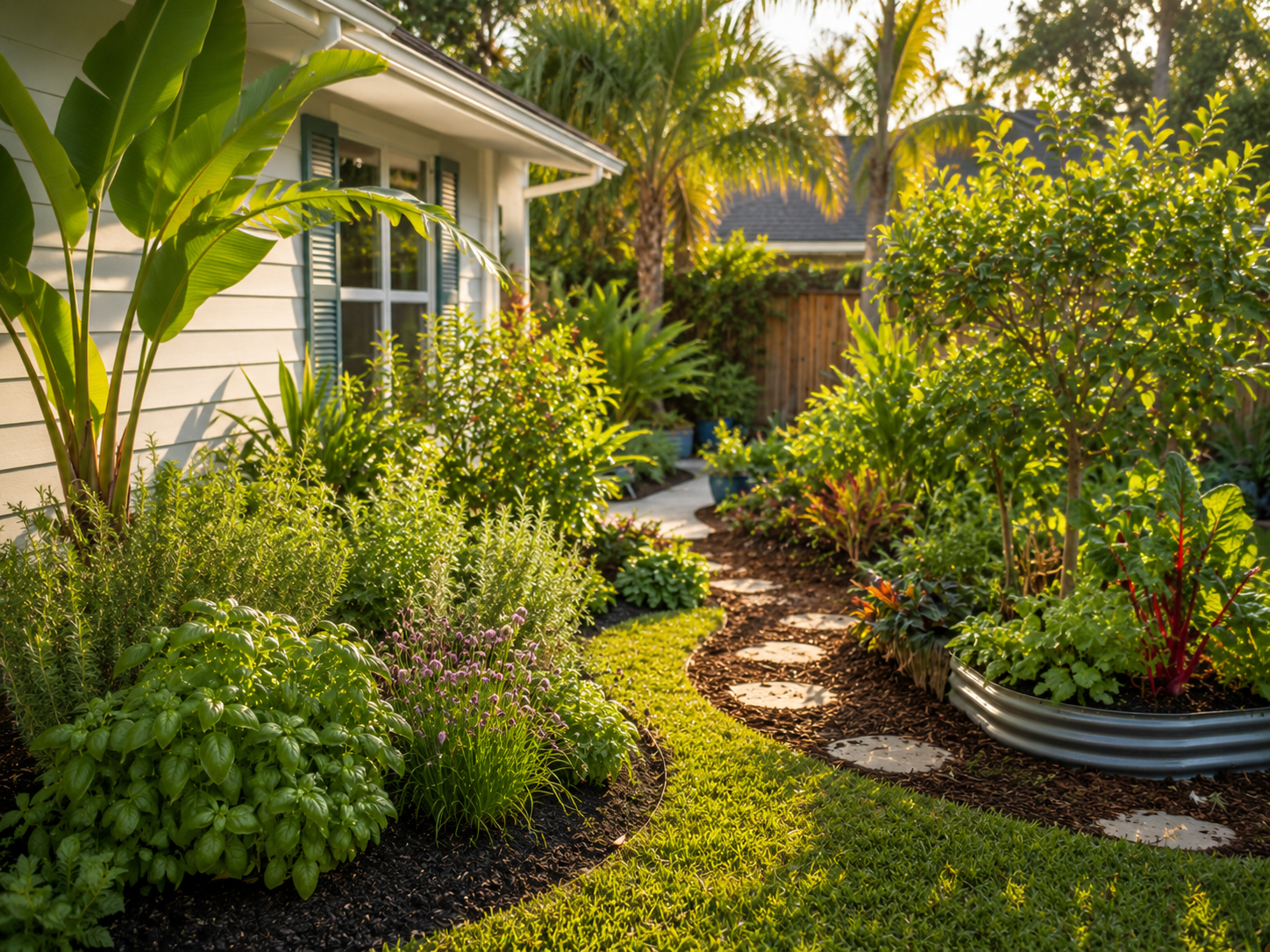
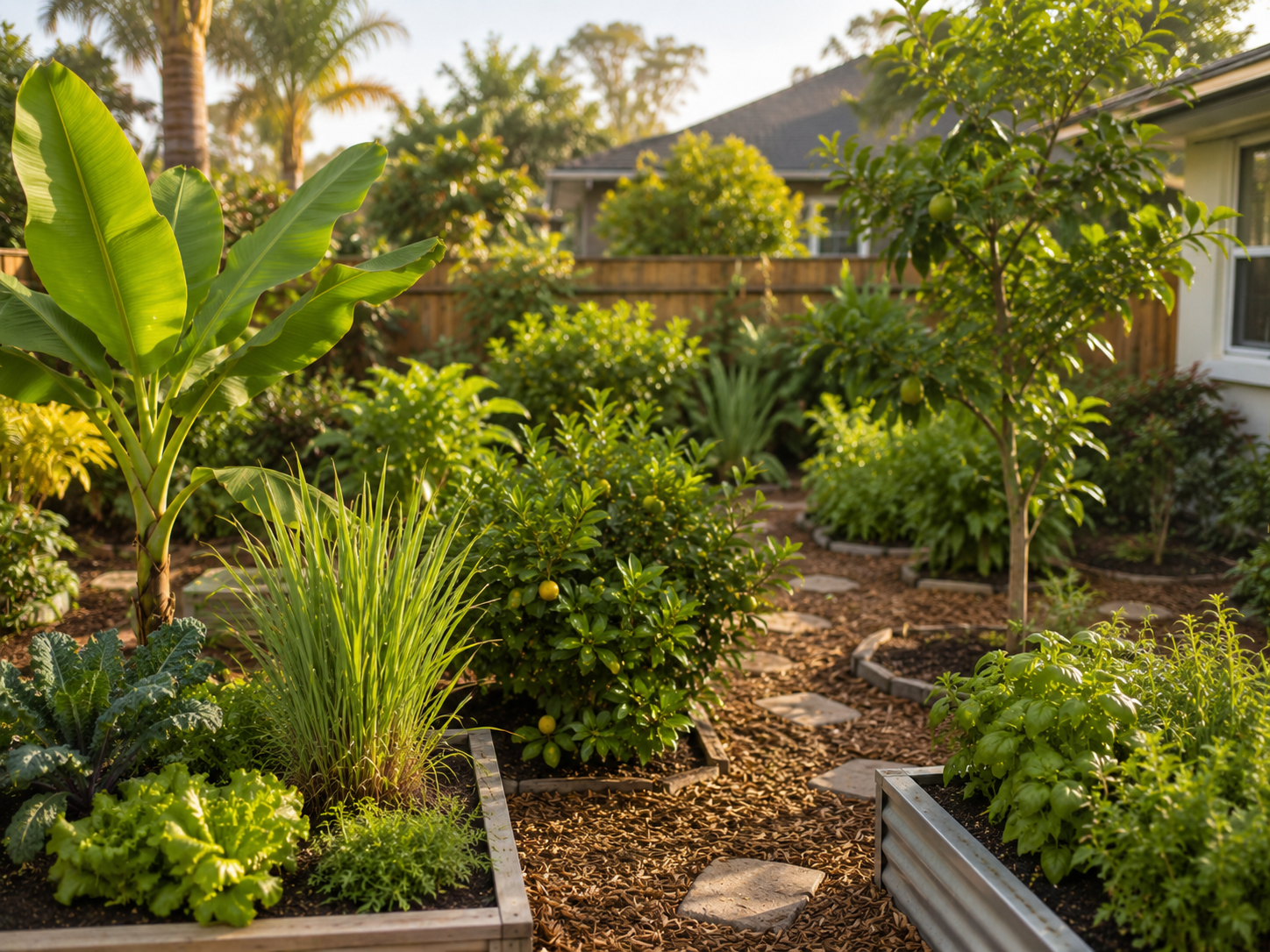
Native roles
Use natives as structure inside a mixed Florida yard
Beautyberry and shrubs
Use native shrubs for texture, habitat, and gentler screening.
Coontie and durable edges
Use sturdy native structure where the yard needs order.
Stopper, grasses, borders
Use repeated native forms to connect edible beds with the rest of the landscape.
Florida native plants do not have to live in a separate, purist category.
For many homeowners, the most realistic approach is a mixed yard:
- some edible plants
- some tropical-looking plants
- some structural ornamentals
- some Florida natives that better fit the place itself
That is the frame this page uses.
Why Add Natives at All?
Native plants can help a Florida yard feel more regionally grounded.
They are often useful for:
- lower-maintenance structure after establishment
- pollinator and wildlife value
- better adaptation to Florida conditions
- replacing generic landscape filler with something more place-specific
This does not require turning the whole yard into a natives-only project.
The Roles Natives Can Play
The most useful way to add native plants is by role.
Native shrubs and softer screening
These help add color, habitat value, and Florida identity without forcing a formal landscape style.
Native structure and front-of-bed control
These are especially useful when the yard needs repetition, edge control, and a cleaner visual language.
Native evergreen framework
These help with privacy, background structure, and making edible areas easier to defend visually.
How to Mix Natives With the Rest of the Site
A practical Tropicaire-style yard might use:
- fruit trees and rhizome crops where production matters most
- lemongrass or other tidy edibles where edge definition helps
- native shrubs and structure plants where permanence and Florida identity matter more
That mix often works better than trying to force every plant into one philosophy.
Good Native Entry Points
If you want a simple start, begin with one of these directions:
- American beautyberry if you want a memorable native shrub with softer structure
- Coontie if you want durable, tidy native form
- Simpson’s stopper if you want a more structural native hedge option
- Muhly grass if your yard needs repeated border rhythm
These are all easier starting points than trying to redesign the whole property at once.
Native Plants as Alternatives
One of the best uses for natives is as alternatives to more generic landscape roles.
Examples:
- use Simpson’s Stopper or Walter’s Viburnum when you need green structure and privacy
- use Muhly Grass when a bed needs softer repeated edging
- use American Beautyberry when a transition zone needs a Florida-native shrub instead of anonymous filler
This is where natives become practical, not ideological.