Productive but tidy
Edible Landscaping in Florida
Use plant roles, edges, repetition, mulch, and spacing to make a Florida yard productive without making it look accidental.
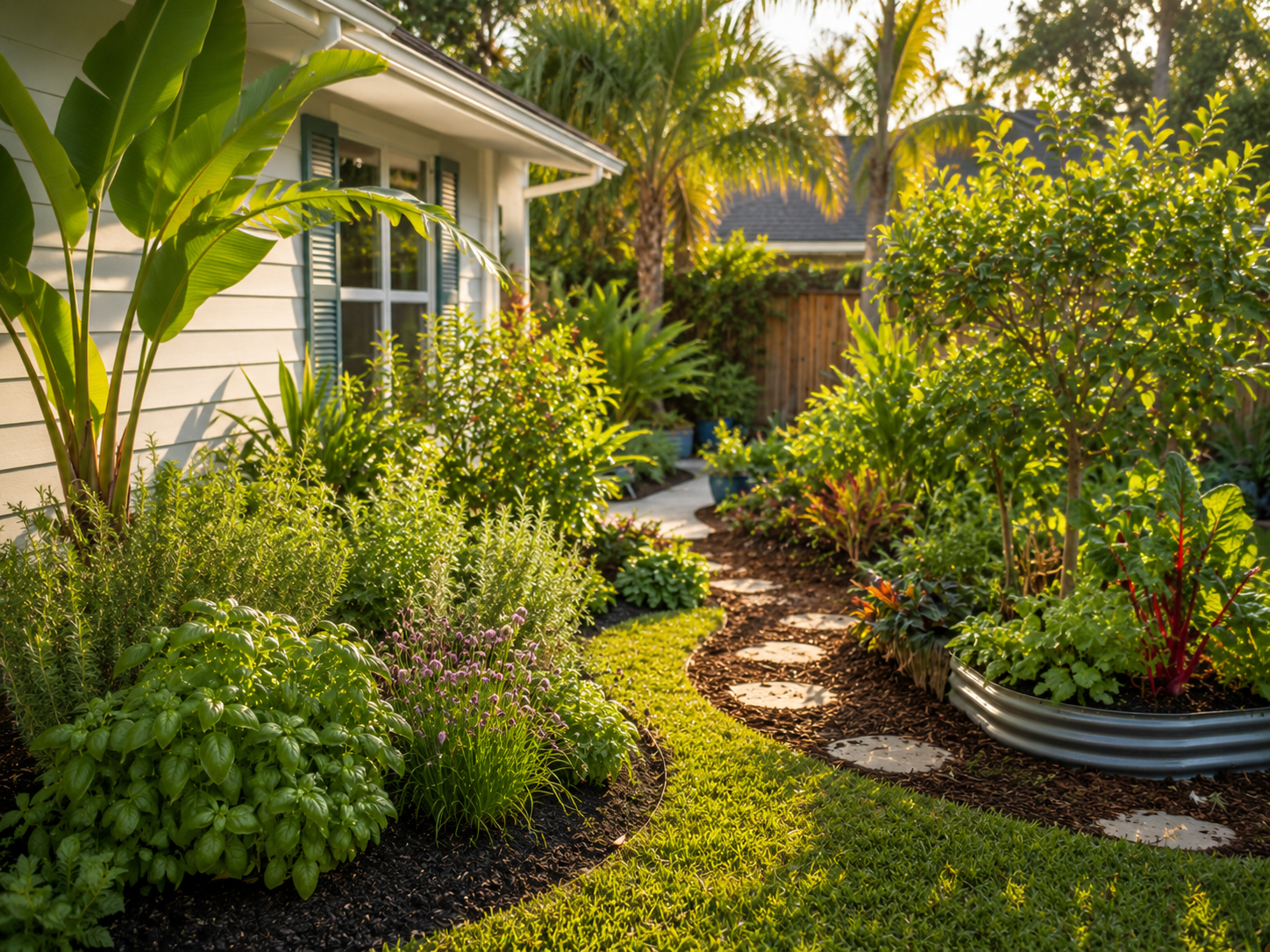
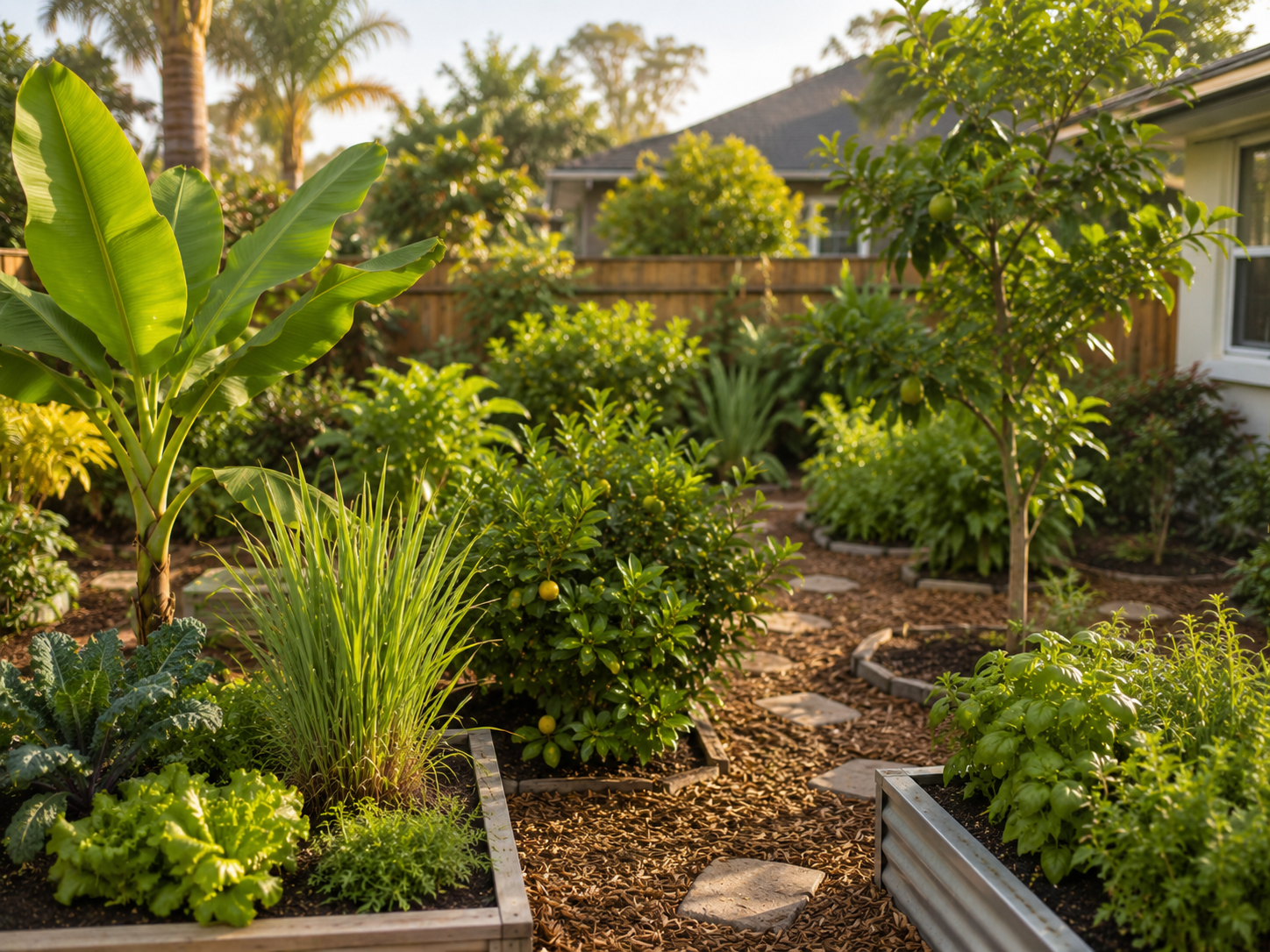
Best starter plants
Choose useful plants that can also support a clean yard structure.
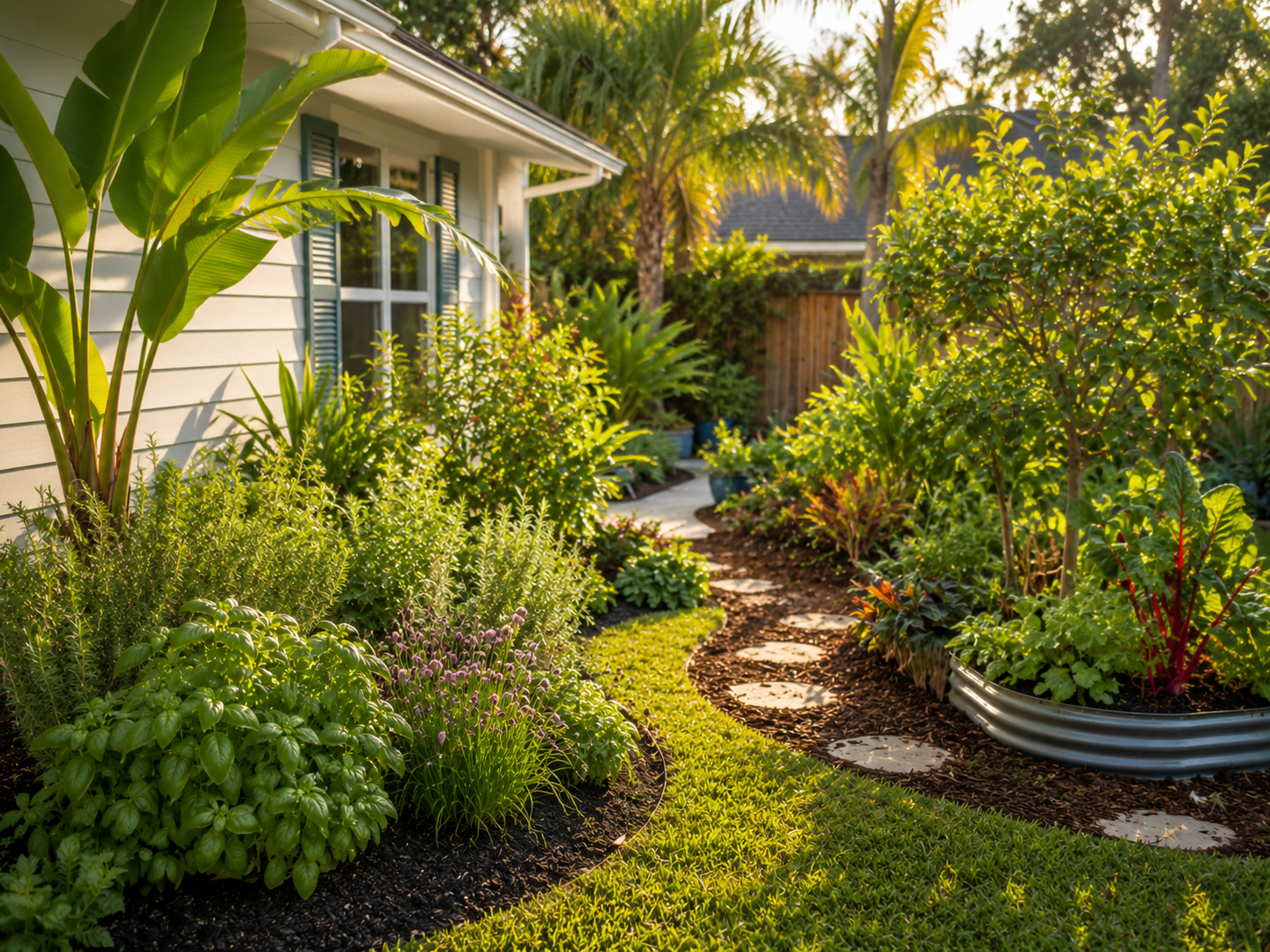
Starter layout
Keep the first version readable from the house, street, and maintenance path.
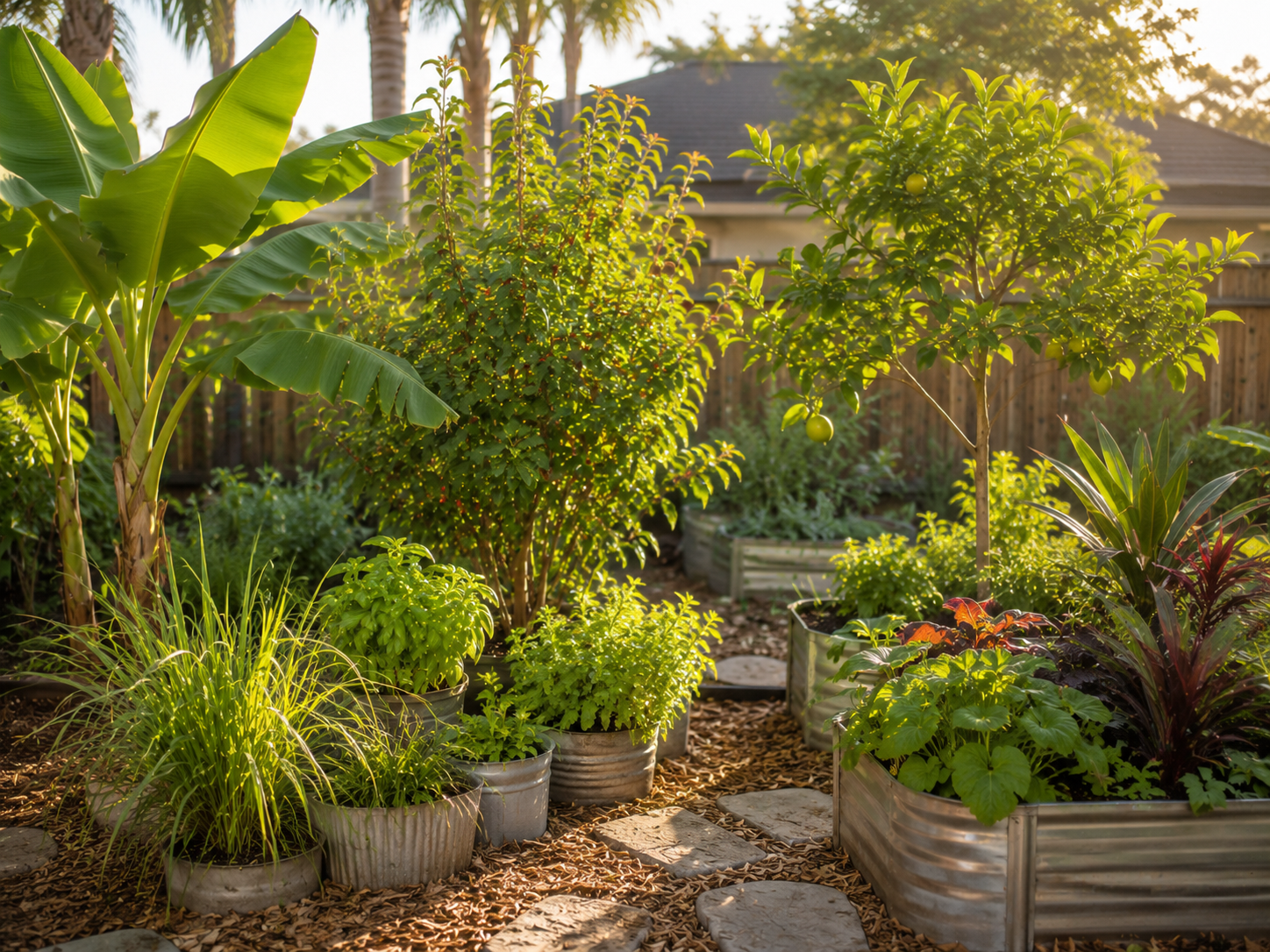
Florida native plants
Bring native structure into practical yard decisions without drifting into a catalog.
Florida edible landscaping is about making a yard productive without making it look accidental.
This pillar is for homeowners who want food, privacy, shade, and beauty to work together.
Guides
Make useful planting look intentional
Use these guides when the yard needs to feed you, shade you, screen views, or hold together visually without looking like a random plant collection.
Design basics
Florida Edible Yard Design Basics
Start with spacing, bed lines, repeated groupings, and habits that make an edible yard feel planned.
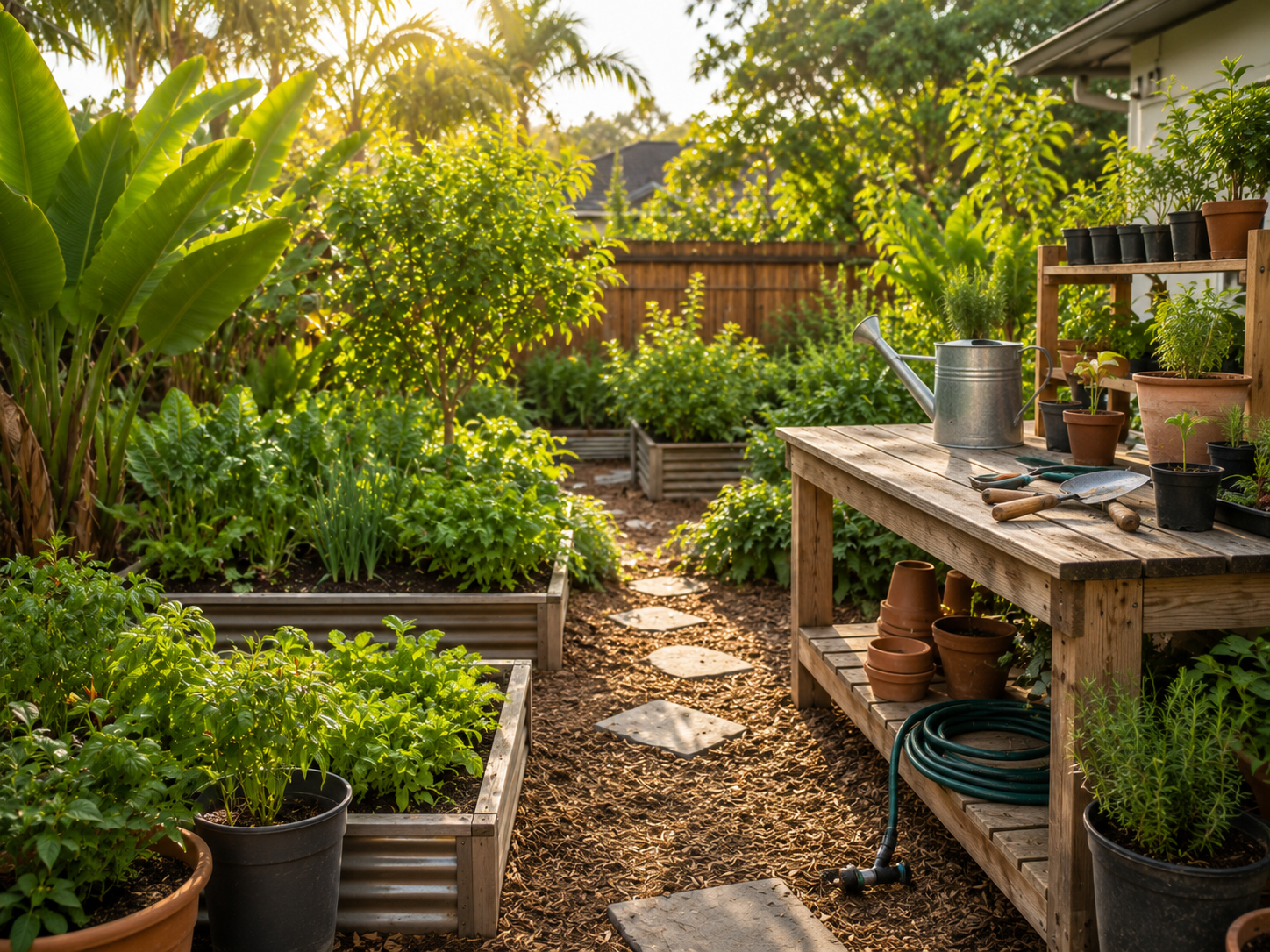 Edges
Edges
Florida Yard Edges and Borders
Make productive planting read cleanly from the street, path, driveway, and house.
Small yards
Small Florida Yard Starter Layout
Use a modest first layout instead of turning a small space into a dense system too soon.
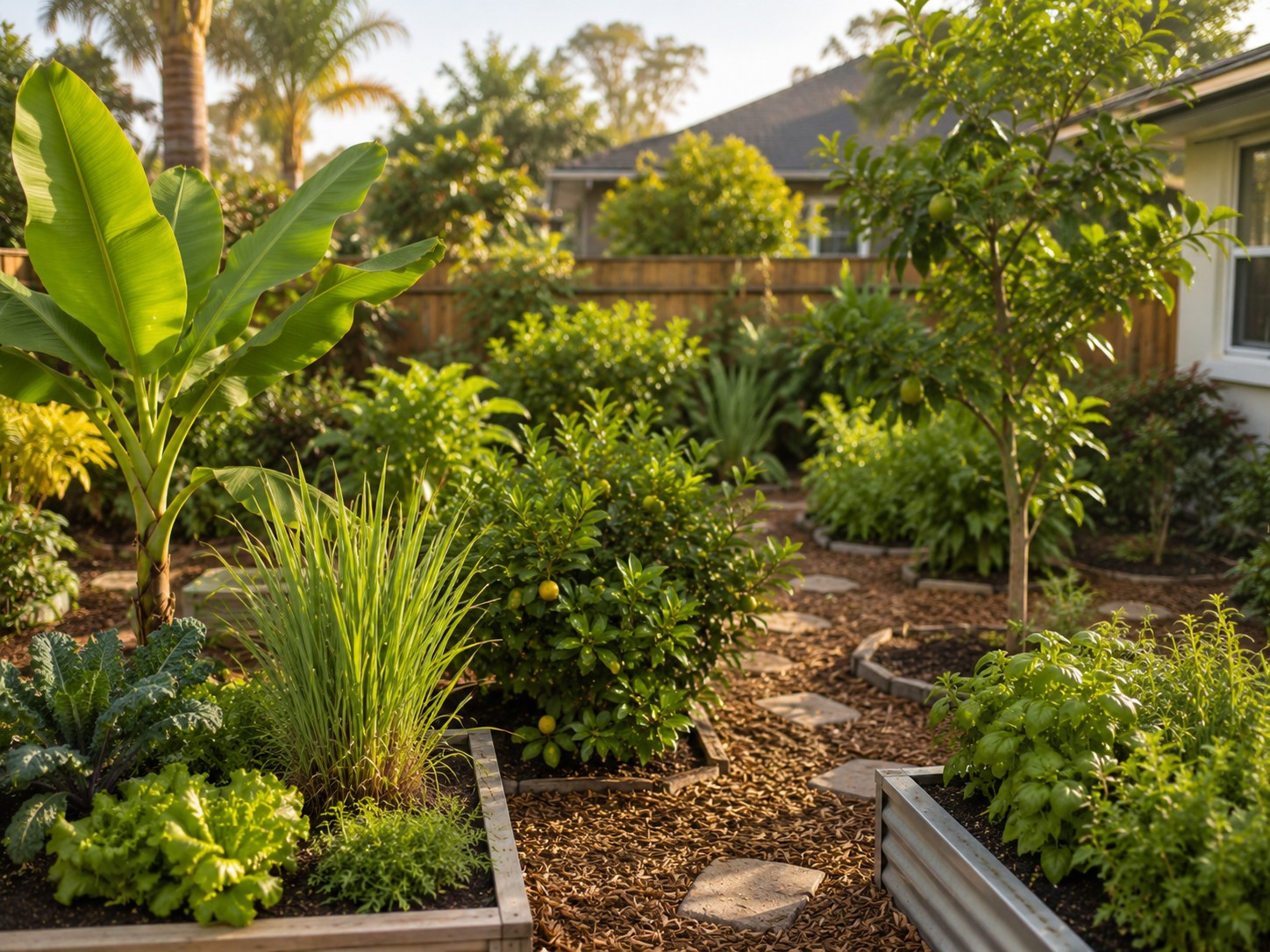 Starter plants
Best Starter Plants for Florida
Begin with reliable plants that are useful and still support a clean yard structure.
Core choices
Choosing Core Plants for a Florida Yard
Match plant roles to tidy design goals before you browse the full directory.
Directory
Florida Plant Directory
Compare species that work as structure, border, support, or edible accent plants.
Why this pillar matters
A good edible landscape should read as a yard first.
Many people want a yard that is both useful and legible. This pillar keeps the topic centered on visual order, practical plant roles, and Florida-specific constraints.
Visual order
Edges, repetition, paths, and mulch make productive planting feel intentional.
Useful plant roles
Choose plants for shade, privacy, food, structure, support, or border work.
Florida constraints
Heat, humidity, sand, rain, wind, and freeze risk shape what actually belongs.