Minimum viable system
Florida Food Forest Core
Start with roles and spacing: structure, reliable producers, support plants, mulch, access, and recovery.
Core roles
A food forest starts as a role map
Structure and shade
Choose the main plants that define spacing and airflow.
Biomass and recovery
Use fast growth, chop-and-drop, and resilient support species.
Mulch and living cover
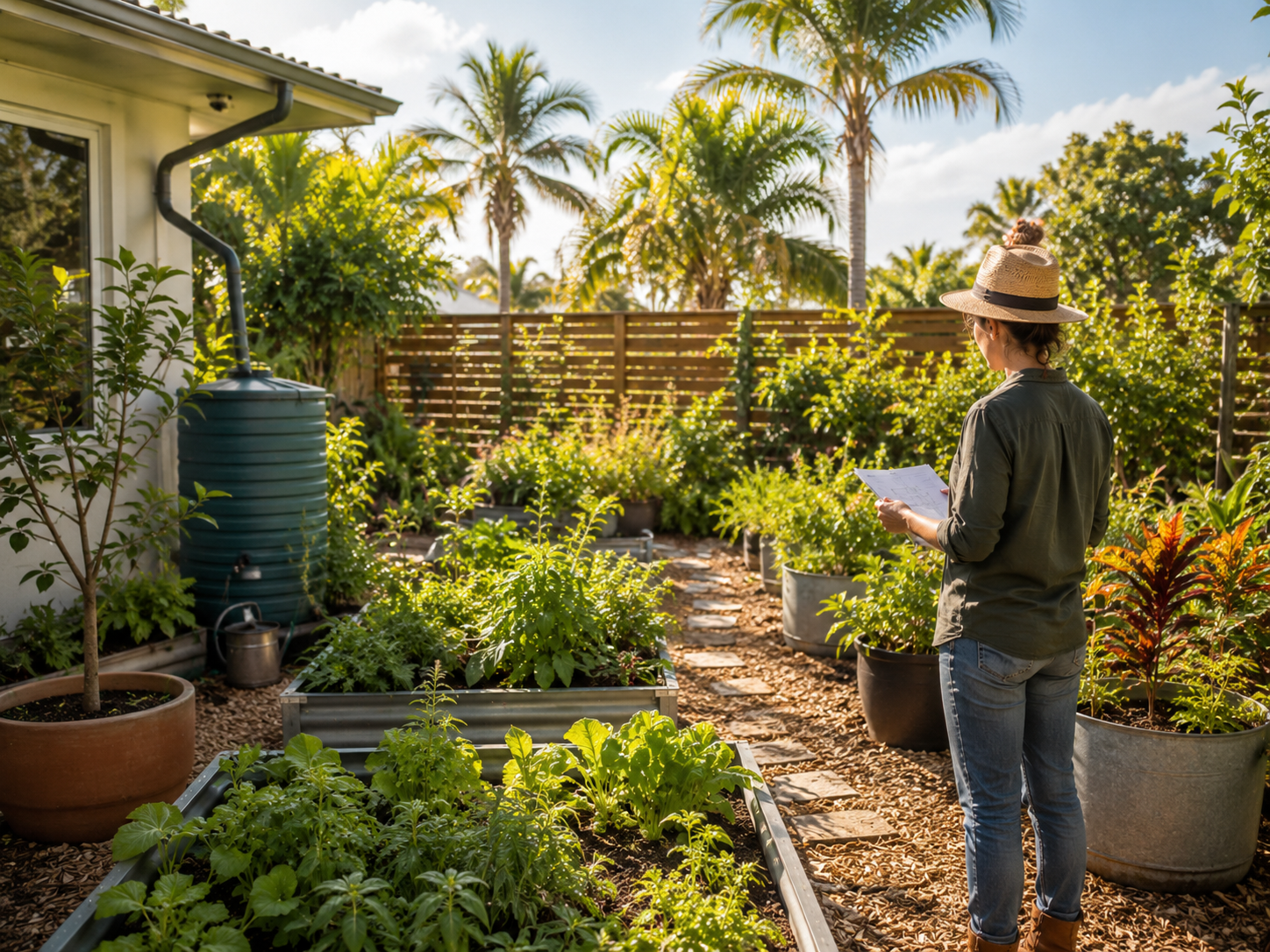
Protect soil and reduce weed pressure while the system matures.
A Florida food forest is not a random collection of edible plants.
It is a layered system built around roles.
Before you chase rare tropicals, build your core.
The Core Roles
Every stable Florida food forest includes some version of:
- Canopy / Structure
- Producers
- Nitrogen Fixers
- Living Mulch / Groundcover
- Biomass Plants
- Border / Edge Plants
You do not need perfection.
You need balance.
1. Canopy & Structure
These create shade, wind buffering, and long-term framework.
Design principle: Keep trees pruned for airflow and storm resilience. Florida humidity rewards openness.
2. Fast Support & Nitrogen Fixers
These accelerate system development.
- Pigeon Pea
- Ice Cream Bean (warm zones)
Why they matter: They improve soil, provide biomass, and protect young trees early on.
Most are temporary scaffolding — not permanent canopy.
3. Reliable Producers
Plants that give consistent returns.
Keep expectations realistic.
Storms and wildlife are part of Florida growing.
4. Living Mulch & Groundcover
These reduce weed pressure and improve soil biology.
- Sweet Potato
- Pineapple (sun pockets)
- Low-growing seasonal vegetables
Rule: Groundcover should suppress weeds — not choke trunks.
5. Rhizome & Understory Crops
These fill productive middle zones that are too shaded or protected for some sun-hungry crops.
- Standard Ginger
- Turmeric
- Galanga in warmer, more protected beds
Why they matter: They give you useful harvest from mulched, humid spaces while helping the system feel denser and more tropical.
6. Border & Edge Plants
These define space and soften wind.
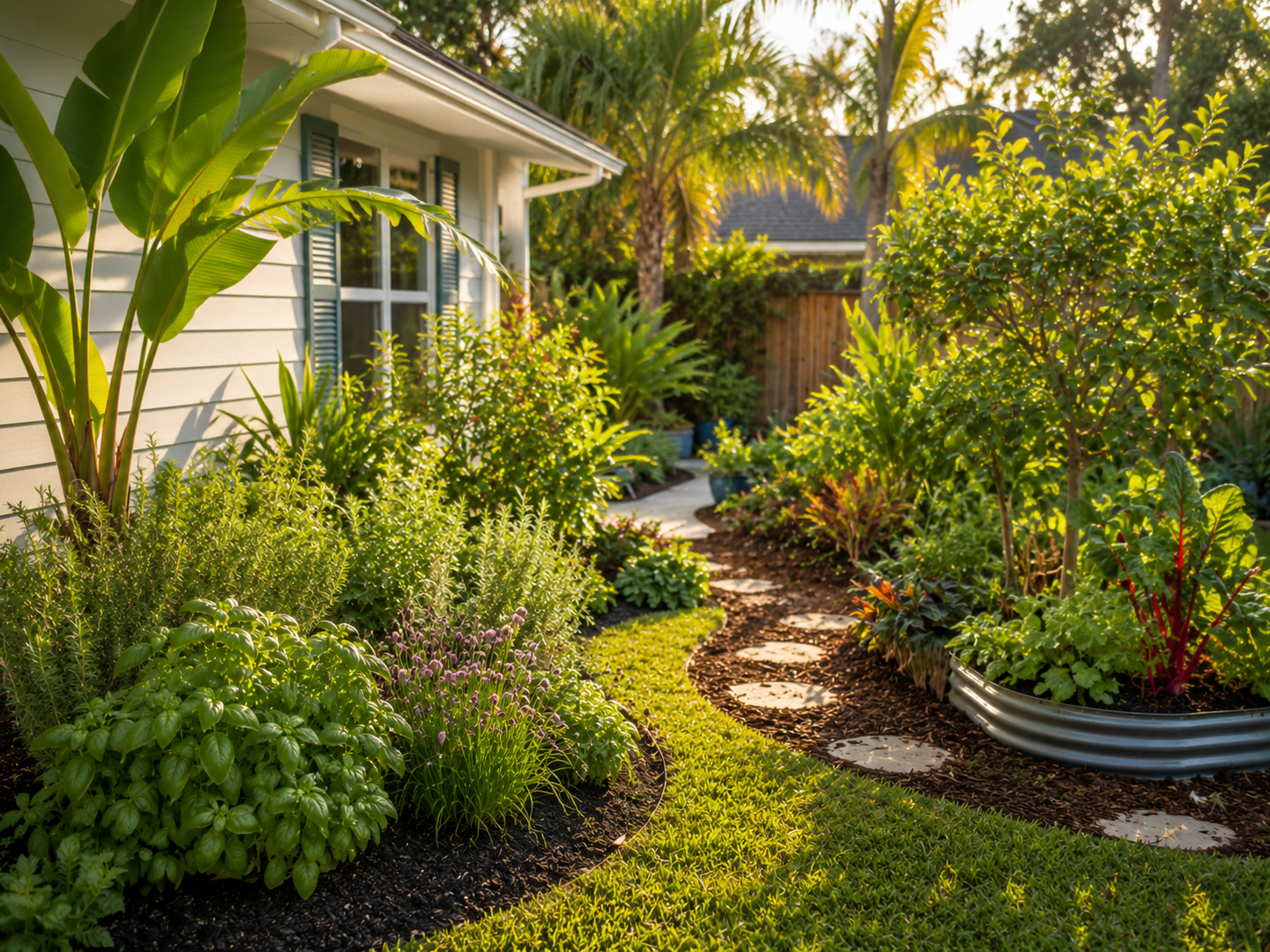
- Lemongrass
- Surinam Cherry
- Katuk (shade-tolerant edge)
- Cranberry Hibiscus for edible color and looser screening
- American Beautyberry where a softer native edge helps the system meet the surrounding yard
Edges matter more than people think.
A Simple Starter Layout (Practical Example)
If you were starting from scratch in Zone 9–10:
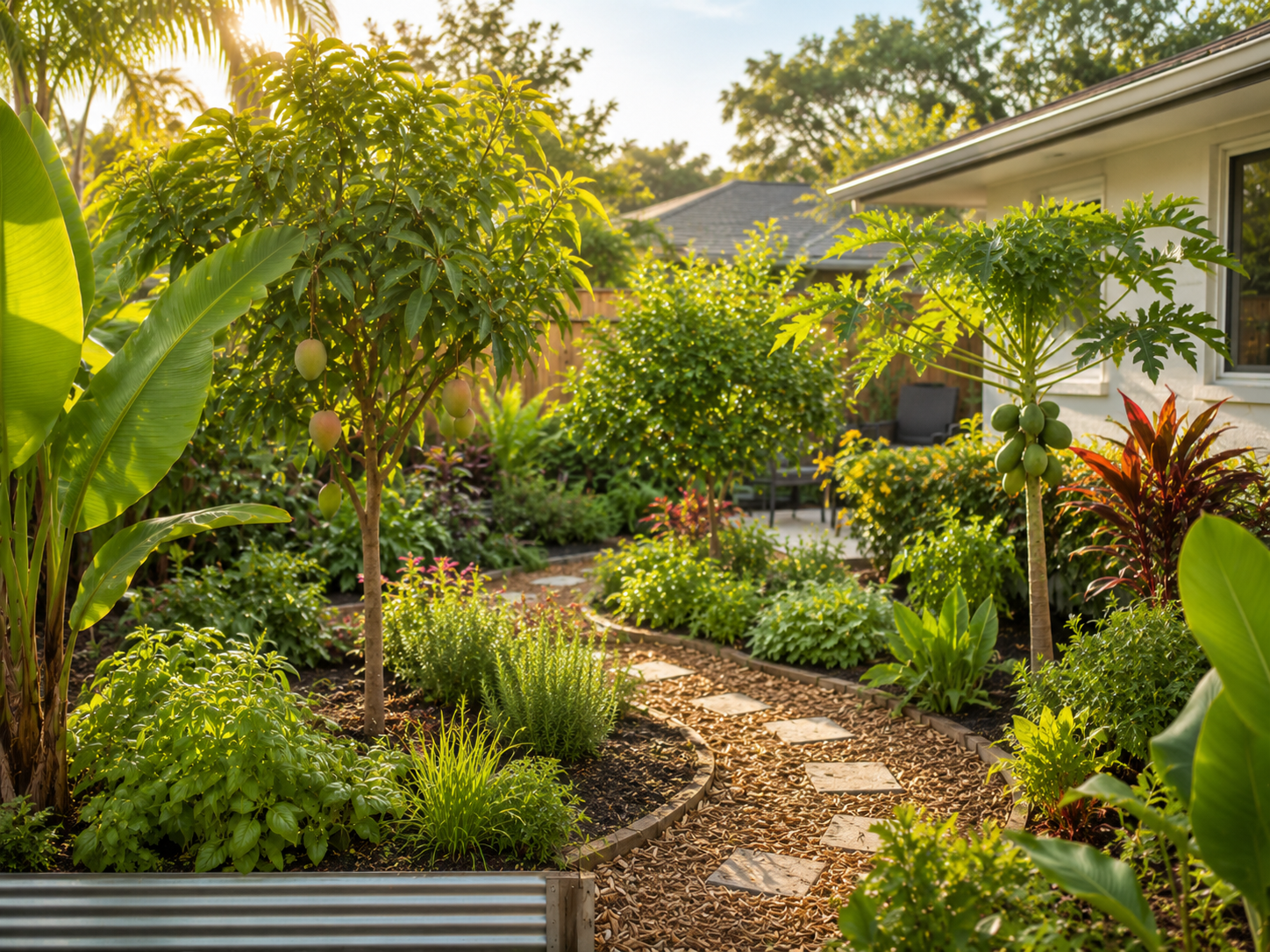
- 1 Mango (primary canopy)
- 1 Loquat (secondary structure)
- 2–3 Pigeon Pea (temporary support)
- 1 Banana mat (moisture zone)
- Sweet potato as living mulch
- Lemongrass defining borders
That alone is a functioning micro food forest.
Add complexity slowly.
Florida Reality Notes
- Wind matters more than cold most years.
- Drainage matters more than fertilizer.
- Mulch matters more than most inputs.
- Airflow prevents more problems than sprays.
Where to Go Next
- Explore the Florida Plant Directory
- Read individual plant guides
- Add one layer at a time
A food forest grows in phases.
So should you.